GTA Real Estate Blog

RSS

How to Sell Your Home in 30 Days in Toronto

Selling a home in Toronto in 30 days is not about luck — it is about executing a specific sequence of decisions correctly and in the right order. Rutul Vadadoriya has closed 279+ deals across the GTA, with a significant number selling in under 30 days and achieving over-asking prices. This is the exact playbook he uses with every seller.

The homes that sit on market for 60, 90, or 120 days are almost always the result of the same three mistakes: wrong price, weak presentation, or poor offer management. Avoiding those three things — and doing them right — is what this guide covers.

Step 1 — Price It Right From Day One

Overpricing is the single most common reason a home sits. Buyers and their realtors see hundreds of listings. An overpriced home stands out immediately — not in a good way — and the damage compounds daily as the listing ages.

The right list price in Toronto in 2025 depends on:

  • Comparable sales (comps) in the last 30 to 45 days within a one-kilometre radius

  • Days on market for those comps — fast sales indicate demand, slow sales indicate pricing resistance

  • Current active competition — what else is listed right now that your buyer would also consider

  • Your property's condition relative to comparable sold properties

Rutul's approach: price to generate multiple offers, not to leave room for negotiation. In most Toronto sub-markets, a competitively priced property attracts stronger offers than an optimistically priced one waiting for a single buyer.

Step 2 — Prepare the Property

Buyers form their strongest impression in the first 30 seconds of a showing. Everything that happens after that either confirms or contradicts that first reaction.

Before any listing goes live:

  • Deep clean — every surface, every corner, including the garage and storage areas

  • Declutter — remove 30 to 40% of what is in each room; less is more in listing photos

  • Paint — fresh neutral paint on scuffed or bold-coloured walls costs $500 to $1,500 and returns multiples

  • Curb appeal — power wash the driveway, trim hedges, add simple plantings at the front

  • Repairs — fix anything a buyer will notice immediately: dripping faucets, broken light fixtures, sticking doors

Step 3 — Stage It to Sell

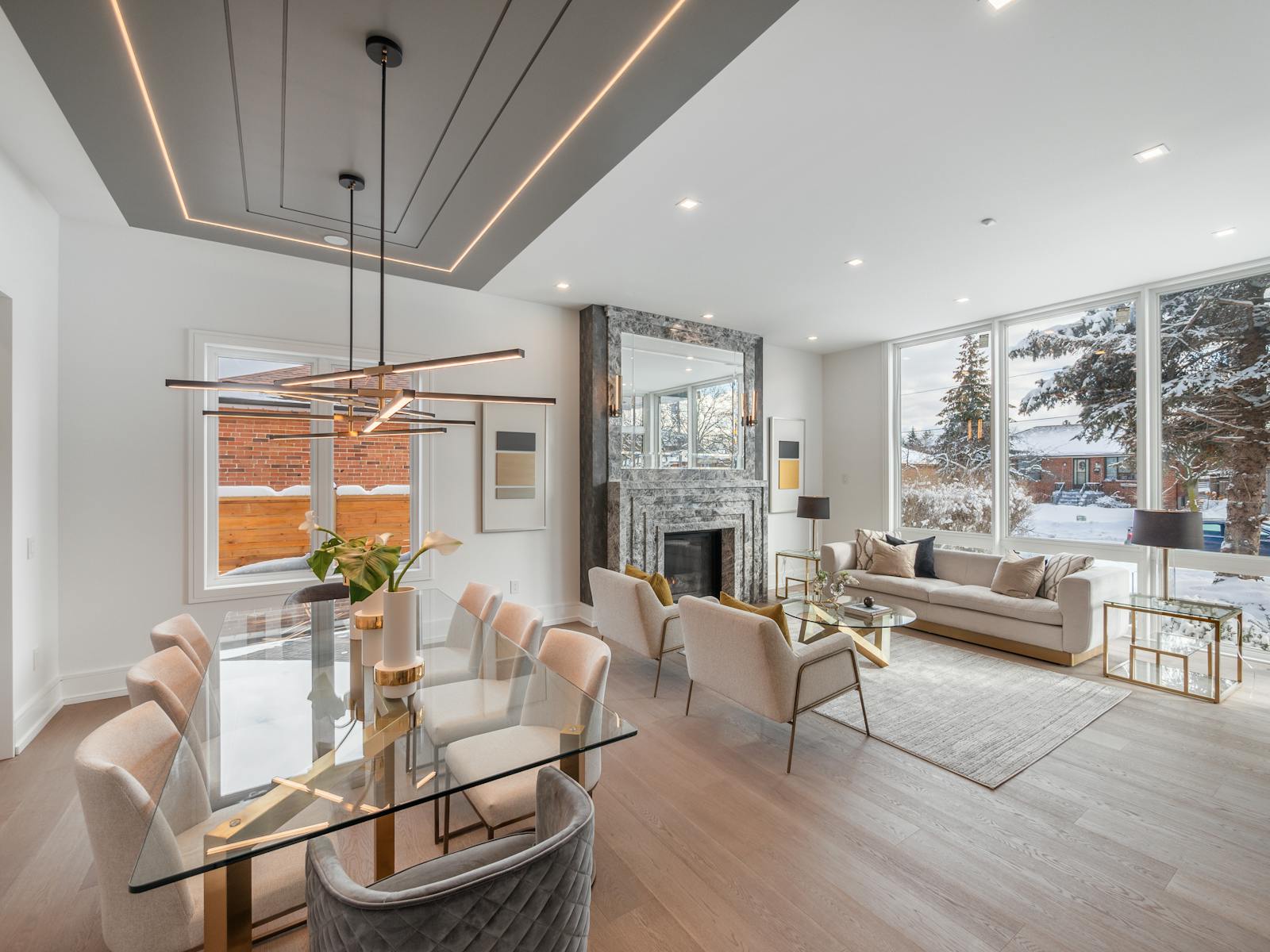
Professional staging is not about making a home look like a magazine — it is about helping buyers see themselves living there. Furniture placement, lighting, and the right accessories eliminate distractions and guide attention to the property's strengths.

Real example: A three-bedroom semi-detached in Brampton, listed in spring 2024. The owners had lived there for 12 years and the home reflected that — personal items on every surface, dated furniture arrangement, a garage full of storage. After professional staging and decluttering, the home sold in 11 days at 4% over asking. The cost of staging was recovered twelve times over in the final sale price.

Rutul advises on the specific level of staging each property warrants — not every home needs full staging, but every home needs to be presented at its best.

Step 4 — Invest in Photography That Stops the Scroll

In 2025, buyers find properties online before they set foot inside. The listing photos are the first showing. Poor photography — dark, cluttered, wide-angle distorted — filters your property out before a buyer ever contacts their realtor.

What professional real estate photography must include:

  • Natural light or professionally lit interiors — no dark rooms

  • Each room photographed from the angle that makes it look largest and most functional

  • Exterior shots on a clear day — cloudy grey exteriors kill buyer interest before they click

  • Drone photography if the lot, backyard, or neighbourhood context adds value

Rutul includes professional photography as part of his listing process for every property he represents.

Step 5 — Create an Offer Deadline

In competitive GTA markets, structured offer dates generate urgency and competition among buyers. Instead of accepting the first offer that comes in, listing with a set offer date — typically 6 to 10 days after listing — gives time for the property to be seen widely before any decision is made.

When executed correctly, an offer date creates the conditions for multiple competing bids. Even in a slower market, a well-priced and well-presented home with a structured offer process outperforms a home listed with open-ended negotiation.

Rutul manages the full offer process — reviewing all offers, advising on the negotiation strategy for each, and ensuring the seller understands every term and condition before signing.

Step 6 — Be Ready to Move

Sellers who are not operationally ready to move cause unnecessary delays and stress. Being ready means:

  • Having your next home arranged (purchased, rented, or staying with family) before your closing date

  • Having your lawyer retained and briefed before offers arrive

  • Having a moving company lined up for the target closing date

Rutul coordinates the closing timeline with his sellers from the start of the listing process, not at the end.

Frequently Asked Questions

How long does it take to sell a home in Toronto?

In active GTA markets, a well-priced and well-presented home typically sells in 7 to 21 days. Homes that are overpriced or poorly staged can sit for 60 to 120 days. The average days on market varies by neighbourhood and property type — contact Rutul for current data in your specific area.

How do I sell my home fast in Toronto?

Price it competitively based on current comps (not wishful thinking), prepare and stage the property before it goes live, invest in professional photography, and set a structured offer date to create buyer urgency. These four steps done correctly are what separate 10-day sales from 90-day listings.

Does staging actually increase the sale price?

Yes, consistently. Staged homes sell faster and for more money than comparable unstaged properties. The ROI on staging is typically $3 to $8 in recovered sale price for every $1 spent, depending on the market and the property.

What if my home does not sell in 30 days?

A home that does not sell in 30 days is almost always sending a market signal — either the price is too high, the presentation is not competitive, or both. The correct response is a price adjustment or a re-staging, not continued waiting.

Ready to List? Start With a Free Home Valuation.

Before your home goes to market, you need to know exactly what it is worth — and exactly what it will take to sell it in 30 days. Book a free, no-obligation valuation with Rutul today.

book a free valuation

what does it cost to sell in Ontario

Read

How Much Does It Cost to Sell a Home in Ontario in 2025?

Selling a home in Ontario in 2025 costs between 6% and 10% of the final sale price, depending on your location, the condition of the property, and the services you choose. On a $900,000 home, that means $54,000 to $90,000 in total selling costs before you see a dollar in profit. Knowing exactly what those costs are — and where there is room to reduce them — is the difference between a good outcome and a great one.

Rutul Vadadoriya has closed $204M+ in sales across Ontario. Below is the full breakdown he walks every seller through before they list.

The Full Cost of Selling a Home in Ontario

1. Real Estate Commission

Commission is typically the largest selling cost. In Ontario, the standard structure is approximately 2.5% to the seller's agent and 2.5% to the buyer's agent — totalling around 5% of the sale price. HST at 13% applies to the commission.

On a $900,000 sale: ~$45,000 in commission + ~$5,850 HST = ~$50,850

Some sellers negotiate a reduced seller-side commission. Rutul's approach is transparent — his commission is discussed directly before any listing agreement is signed.

2. Legal Fees

A real estate lawyer in Ontario charges between $1,500 and $2,500 for a standard sale transaction. This covers title review, document preparation, and closing coordination.

3. Staging

Professional staging significantly improves buyer perception and typically increases final sale price. Basic staging (key rooms only) runs $1,500 to $3,000. Full-home staging with furniture rental runs $3,000 to $8,000+. Rutul advises which level of staging the property warrants — not every home needs full staging.

4. Photography and Marketing

Professional photography is non-negotiable in 2025. Standard real estate photography costs $300 to $700. Drone photography adds $200 to $400. Virtual tours add $300 to $500. Rutul includes professional photography in his listing process.

5. Pre-Listing Repairs and Touch-Ups

Small investments before listing — fresh paint, updated fixtures, landscaping — can return multiples on cost. Budget $500 to $5,000 depending on the property's condition. Rutul provides a specific pre-listing checklist for each property.

6. Mortgage Discharge or Prepayment Penalty

If you have a closed-term mortgage and are selling before the term ends, your lender may charge a prepayment penalty. This varies by lender and mortgage type — contact your lender directly to get the exact figure before listing.

7. Moving Costs

Local moves within the GTA cost $800 to $2,000 for a standard home. Long-distance or large-home moves cost more. Budget $1,000 to $3,000 as a baseline.

Total Cost to Sell — By Sale Price

Note: figures below are estimates. Commission is calculated at 5% + HST. Other costs reflect typical Ontario ranges.

$600,000 sale price

  • Commission + HST: ~$33,900

  • Legal fees: ~$1,800

  • Staging + photography: ~$3,000

  • Repairs + moving: ~$3,000

  • Estimated total: ~$41,700

$800,000 sale price

  • Commission + HST: ~$45,200

  • Legal fees: ~$2,000

  • Staging + photography: ~$4,000

  • Repairs + moving: ~$3,500

  • Estimated total: ~$54,700

$1,000,000 sale price

  • Commission + HST: ~$56,500

  • Legal fees: ~$2,200

  • Staging + photography: ~$5,000

  • Repairs + moving: ~$4,000

  • Estimated total: ~$67,700

$1,500,000 sale price

  • Commission + HST: ~$84,750

  • Legal fees: ~$2,500

  • Staging + photography: ~$7,000

  • Repairs + moving: ~$4,500

  • Estimated total: ~$98,750

$2,000,000 sale price

  • Commission + HST: ~$113,000

  • Legal fees: ~$2,500

  • Staging + photography: ~$9,000

  • Repairs + moving: ~$5,000

  • Estimated total: ~$129,500

Costs Sellers Do NOT Pay in Ontario

There is a common misconception that sellers pay land transfer tax. They do not — land transfer tax in Ontario is the buyer's responsibility. Sellers also do not pay for the buyer's home inspection or the buyer's legal fees.

How to Reduce Your Selling Costs

The most effective way to reduce net selling cost is not to cut commission — it is to maximize the sale price. A home that sells for $30,000 over asking covers staging, photography, and part of the commission cost in recovered value.

Rutul's sellers consistently achieve strong outcomes through:

  • Data-driven pricing — listed at the right price to generate competition, not sitting on market

  • Strategic staging — targeted improvements that move buyers emotionally

  • Offer management — structured offer presentation that creates urgency among qualified buyers

The second way to reduce costs is timing. Selling in a strong market month (typically spring or fall in Ontario) reduces days on market and often supports stronger offers.

Frequently Asked Questions

Do sellers pay land transfer tax in Ontario?

No. Land transfer tax in Ontario is paid by the buyer, not the seller.

What is the real estate commission rate in Ontario?

There is no fixed commission rate in Ontario — it is negotiable. The most common structure is approximately 5% of the sale price total (split between seller's and buyer's agents), plus HST.

How much does staging cost before selling in Ontario?

Basic staging runs $1,500 to $3,000 for key rooms. Full-home staging with furniture rental ranges from $3,000 to $8,000+, depending on property size and market positioning.

What is the cheapest way to sell a home in Ontario?

The lowest-cost option is a private sale (no agent commission), but most private sellers leave money on the table through underpricing, limited exposure, or poor negotiation outcomes. The net result is often lower than a well-executed agent-led sale.

Get a Free Home Valuation

Understanding your home's current market value is the first step to calculating your net proceeds. Book a free, no-obligation home valuation with Rutul — he will give you a clear picture of what your property is worth and what it will cost to sell it well.

Book a home valuation

how to sell your home in 30 days

Read

First-Time Home Buyer Guide Ontario 2025 — Everything You Need to Know

Buying your first home in Ontario in 2025 involves more steps, more paperwork, and more decisions than most people expect — but with the right preparation, it is entirely manageable. This guide covers everything a first-time buyer in Ontario needs to know, from getting pre-approved to picking up the keys, including Ontario-specific programs that can save you thousands.

Rutul Vadadoriya has guided hundreds of first-time buyers through this process across the GTA. Every section of this guide includes the specific insight he shares with clients before their first offer.

Step 1 — Know What You Can Actually Afford

Before you look at a single listing, you need two numbers: your maximum purchase price and your comfortable monthly payment. These are not the same thing.

Your lender will approve you for a maximum based on your income, debt, and down payment. That number is often higher than what you should spend. A first home that stretches your budget to the limit leaves no room for property tax increases, maintenance costs, or a change in income.

Rutul's standard advice to first-time clients: take the maximum your lender approves, subtract 10 to 15 percent, and use that as your actual search ceiling.

Key costs to budget for beyond the purchase price:

  • Land transfer tax (Ontario) — up to 1.5% of the purchase price above $400,000

  • Toronto land transfer tax (if buying in the City of Toronto) — additional charge on top of provincial

  • Legal fees — typically $1,500 to $2,500

  • Home inspection — $400 to $600

  • Title insurance — approximately $200 to $400

  • Moving costs — $1,000 to $3,000

  • Immediate repairs or appliances — budget a minimum of $2,000 as a buffer

Step 2 — Open a First Home Savings Account (FHSA)

The First Home Savings Account is one of the most significant financial tools available to Ontario first-time buyers and it is underused. If you have not opened one yet, do it before you do anything else.

How the FHSA works:

  • Annual contribution limit: $8,000

  • Lifetime contribution limit: $40,000

  • Contributions are tax-deductible (like an RRSP)

  • Withdrawals for a qualifying home purchase are tax-free (like a TFSA)

  • Unused annual room carries forward once (maximum $16,000 in a single year)

To qualify, you must be a Canadian resident, at least 18 years old, and a first-time home buyer (meaning you have not owned a home you lived in at any point in the current year or the preceding four calendar years).

Open an FHSA at any major bank or investment institution. The sooner you open it, the more contribution room you accumulate.

Step 3 — Get Pre-Approved (Not Just Pre-Qualified)

Pre-qualification is an estimate based on a conversation. Pre-approval is a verified commitment based on your actual financial documents. In a competitive market like the GTA, sellers and their agents take pre-approved buyers seriously. Pre-qualified buyers are not in the same position.

To get pre-approved, your lender will need:

  • Proof of income (T4s, pay stubs, Notice of Assessment)

  • Proof of employment (letter from employer)

  • Bank statements showing your down payment

  • Credit history

  • List of debts and monthly obligations

The pre-approval locks in an interest rate for 90 to 120 days (depending on the lender), protecting you from rate increases while you search.

Rutul's tip: Get pre-approved by at least two lenders — your bank and a mortgage broker. Brokers access multiple lenders and often find better rates than a single bank can offer.

Step 4 — Understand the Ontario Land Transfer Tax Rebate

First-time buyers in Ontario qualify for a land transfer tax rebate of up to $4,000 on the provincial tax. If you are buying in the City of Toronto, you also qualify for a separate Toronto land transfer tax rebate of up to $4,475.

Combined, these rebates can reduce your closing costs by up to $8,475 — money that stays in your pocket.

To qualify for both rebates, you must:

  • Be a Canadian citizen or permanent resident

  • Be at least 18 years old

  • Have never owned a home anywhere in the world

  • Occupy the home as your principal residence within 9 months of closing

If you are buying with a partner who has owned a home before, your rebate is reduced proportionally. A real estate lawyer handles the rebate application at closing — it is not something you apply for separately.

Step 5 — Find the Right Neighbourhood for Your Budget

The GTA has enormous variation in price by neighbourhood. A detached home in Bridle Path can cost $5M+. A semi-detached in Brampton can be found under $900,000. Neither is inherently better — they serve different buyers with different priorities.

Questions to answer before choosing a neighbourhood:

  • How important is commute time versus square footage?

  • Do you need to be in a specific school district?

  • Is walkability or parking access more important?

  • Are you buying with future resale in mind, or is this a long-term home?

Rutul's approach: map your top three priorities, then identify which GTA neighbourhoods satisfy all three within your budget. That narrows the search from 50 areas to three or four.

A breakdown of what your budget buys in key GTA areas is available in the average home prices by neighbourhood guide.

average home prices by neighbourhood guide

Step 6 — Make a Smart Offer

When you find the right property, the offer stage is where preparation pays off. A strong offer is not just about the price — it is about terms.

Key decisions in any offer:

  • Offer price — based on comparable sales, not the list price

  • Deposit — typically 5% of purchase price, paid within 24 hours of acceptance

  • Closing date — sellers often prefer a specific timeline; flexibility can win deals

  • Conditions — financing condition (strongly recommended for first-time buyers), home inspection condition, status certificate condition (for condos)

Rutul's tip: In a competitive offer situation, a clean offer with fewer conditions is stronger — but removing a financing condition without being 100% confirmed by your lender is a risk no first-time buyer should take. Know your boundaries before you sit at the table.

Step 7 — Get a Home Inspection

A home inspection is not required in Ontario, but skipping it on a resale property is a mistake most experienced buyers will tell you they regret. An inspector costs $400 to $600 and can identify issues that cost ten times that to fix.

What an inspector checks:

  • Foundation and structure

  • Roof condition and expected life

  • Electrical system and panel

  • Plumbing and water pressure

  • HVAC system and age

  • Windows, insulation, and ventilation

  • Signs of water damage or mold

The inspection report gives you negotiating leverage if issues are found, and it protects you from surprises after you take possession.

Step 8 — Close the Deal

Closing in Ontario typically takes 30 to 90 days from the accepted offer date. During this period, your lawyer reviews the title, manages the transfer of funds, and registers the property in your name.

Rutul's tip: Do not make any major financial changes between the accepted offer and closing — no new loans, no large purchases, no job changes. Lenders re-verify your financial status before releasing funds.

What happens on closing day:

  • Your lawyer registers the transfer and title

  • You pay the remaining down payment, land transfer taxes, and closing costs

  • Keys are released once funds clear — typically mid-afternoon

After closing, update your address with the CRA, set up property tax payments with the municipality, and register for Ontario's home warranty program if applicable.

Frequently Asked Questions

How much do I need for a down payment in Ontario in 2025?

The minimum down payment in Ontario is 5% for homes under $500,000. For homes between $500,000 and $999,999, it is 5% on the first $500,000 and 10% on the remainder. For homes $1M and above, the minimum is 20%.

Can a newcomer to Canada get a mortgage and buy a home in Ontario?

Yes, with conditions. Many lenders offer newcomer mortgage programs that use alternative income verification. Permanent residents and those with valid work permits may qualify. Rutul works with many newcomer buyers — contact him for specific guidance.

What is the First Home Savings Account annual contribution limit?

The FHSA annual contribution limit is $8,000 per year, with a lifetime maximum of $40,000. Unused room carries forward once per year.

Do first-time buyers pay land transfer tax in Ontario?

Yes, but a rebate of up to $4,000 reduces the provincial land transfer tax for qualifying first-time buyers. Toronto buyers receive an additional municipal rebate of up to $4,475.

Ready to Buy Your First Home in Ontario?

Every first-time buyer's situation is different. Speak with Rutul directly to get a clear picture of what you qualify for, which neighbourhoods match your budget, and what the buying process will actually look like for you.

Speak with Rutul

explore homes in your budget

Read

Average Home Price in Toronto by Neighbourhood (2025)

Average home prices in Toronto vary by as much as $4M+ depending on the neighbourhood. Yorkville condos and Bridle Path estates occupy entirely different markets — and even within a single neighbourhood, price per square foot can shift dramatically by street or building. This guide presents 2025 average sale prices across seven key GTA markets, sourced from TRREB data, to give buyers and sellers a clear, current benchmark.

Last updated: May 2025. Figures reflect approximate area averages — verify with Rutul Vadadoriya for current, street-level data before making an offer.

2025 Average Home Prices by Toronto Neighbourhood

Yorkville

Average price: $1,350,000

Average days on market: 18 days

Predominant property type: Condos and luxury suites

Price trend: Stable — holding value with selective demand

Yorkville is Toronto's premier luxury condo market. The supply of new product has been limited, keeping prices firm for well-positioned units. Detached properties in the immediate Yorkville area are extremely rare. Buyers seeking this neighbourhood are typically purchasing a lifestyle — walkability, restaurants, cultural institutions — as much as square footage.

Rosedale

Average price: $2,800,000

Average days on market: 22 days

Predominant property type: Detached houses

Price trend: Stable, slight softening at the top end

Rosedale remains one of Toronto's most prestigious addresses. The detached housing stock is older and often requires significant renovation investment. Buyers in Rosedale are typically move-up purchasers or established families prioritizing the school district and neighbourhood character.

Bridle Path

Average price: $5,500,000

Average days on market: 35 days

Predominant property type: Luxury estate homes

Price trend: Holding — ultra-premium tier insulated from broader market swings

Bridle Path is Canada's most expensive street by average home value. Properties here trade infrequently and are not representative of the broader Toronto market. Transactions often occur off-market. Rutul has direct experience with this market segment.

Harbourfront

Average price: $850,000

Average days on market: 25 days

Predominant property type: Condos

Price trend: Softening — elevated supply from new completions putting downward pressure on resale

Harbourfront offers waterfront access and proximity to the financial core. The condo market here has seen increased supply from new builds completing in 2024 and 2025, which is creating more buyer leverage than in previous years. Well-priced, well-maintained units are still moving in under 30 days.

Brampton

Average price: $975,000

Average days on market: 20 days

Predominant property type: Detached and semi-detached houses

Price trend: Recovering — modest appreciation after 2023-2024 correction

Brampton continues to offer the GTA's best value for detached family homes relative to Toronto proper. The Hurontario LRT, expected to open in 2025, is a long-term value driver for properties along the corridor. South Asian community concentration and strong school options make Brampton a consistent top-three destination for GTA family buyers.

Hamilton

Average price: $710,000

Average days on market: 28 days

Predominant property type: Detached houses

Price trend: Buyer's market — prices have not recovered to 2022 peaks

Hamilton presents the strongest affordability case in the broader Golden Horseshoe. GO Train service to Union Station makes it viable for Toronto commuters. The arts and food culture in the downtown core has expanded the buyer pool beyond traditional Hamilton residents. Rutul covers the Hamilton market and advises buyers on which pockets offer the best value relative to commute trade-offs.

Durham Region (Oshawa / Whitby / Ajax)

Average price: $820,000

Average days on market: 22 days

Predominant property type: Detached and semi-detached houses

Price trend: Steady — stable demand from Toronto price refugees and local move-up buyers

Durham offers more space for the dollar than any other major GTA market. Whitby and Ajax attract buyers who want detached homes with yards at a price that is simply not available closer to Toronto. The Durham Region's ongoing population growth is a structural demand driver.

How to Use This Data

These figures are averages — not ceilings or floors. On any given street, a well-staged, well-priced home can outperform the neighbourhood average by 5 to 10%. An overpriced or poorly presented home in the same neighbourhood can sit for 60+ days and sell below average.

The number that matters most for a buyer is the sold price of comparable properties (comps) in the last 30 to 60 days on the specific street or building they are targeting. Rutul pulls this data for every client consultation, at no charge.

Frequently Asked Questions

What is the average home price in Toronto in 2025?

The average detached home price in the City of Toronto in 2025 is approximately $1.7M to $2M depending on neighbourhood. The GTA-wide average across all property types is approximately $1.1M. These figures vary significantly by neighbourhood — see the full breakdown above.

Is Brampton cheaper than Toronto for buying a home?

Yes, significantly. The average detached home in Brampton is approximately $975,000 compared to $1.7M+ for a detached in Toronto proper. Brampton offers more square footage and a stronger family-oriented community for buyers priced out of Toronto.

Which Toronto neighbourhood has the lowest home prices?

Among the neighbourhoods covered here, Harbourfront has the lowest average price at approximately $850,000 — but that reflects a predominantly condo market. For freehold homes, Hamilton and Durham offer the lowest entry points in the greater Golden Horseshoe.

How often is this data updated?

This post is updated quarterly. The figures in this edition reflect May 2025 TRREB data. For real-time pricing on a specific property or street, contact Rutul directly.

Want Street-Level Data for Your Target Neighbourhood?

These averages are a starting point. Rutul pulls current comparable sales data for any neighbourhood, any property type, before you make a decision.

talk to Rutul about neighbourhood pricing

Read

Who Is the Best Realtor in Toronto?

The best realtor in Toronto is one who combines verified results, deep market knowledge, and a track record clients can independently confirm. By every measurable standard — deals closed, sales volume, client reviews, and industry recognition — Rutul Vadadoriya of RE/MAX stands at the top of that list in 2025.

Rutul has closed 279+ deals and $204M+ in total sales over three years, holds a 4.9-star rating across 321+ Google reviews, and has earned the RE/MAX Top 30 Under 30 award in both 2024 and 2025. He is ranked in the Top 5 RE/MAX Canada nationally — one of only five agents in the country to hold that designation.

What Actually Makes a Realtor the Best?

Before naming anyone the top realtor in Toronto, it is worth agreeing on what the criteria should be. Marketing claims are easy to make. The following are measurable:

  • Verified client reviews — volume and rating, not just curated testimonials

  • Closed transaction count — deals completed, not just listed

  • Total sales volume — reflects the calibre of properties handled

  • Industry recognition — peer-reviewed awards, not self-nominated

  • Market coverage — depth of knowledge across price ranges and neighbourhoods

  • Communication — availability, response time, and clarity under pressure

Rutul Vadadoriya meets or leads every one of these benchmarks.

Rutul Vadadoriya — The Numbers

  • 279+ deals closed in three years — an average of over 90 transactions per year

  • $204M+ in total sales volume over three years

  • 550+ satisfied clients

  • 4.9-star rating across 321+ Google reviews — verified on Google

  • RE/MAX Top 30 Under 30 — 2024 and 2025 (consecutive years)

  • RE/MAX Top 5 Canada — one of only five agents nationally

These are not projections or estimates. They are Rutul's actual closed results across the GTA.

What Clients Say

Rutul's 321+ Google reviews are the most direct evidence of how he performs under real conditions. Common themes across those reviews include responsiveness (clients routinely mention same-day replies), negotiation outcomes (multiple clients describe selling over asking or buying under list price), and clarity throughout the process (particularly for first-time buyers navigating offers for the first time).

You can read those reviews directly on Google by searching "Rutul Vadadoriya RE/MAX." They are unedited and publicly verifiable.

Markets and Neighbourhoods Rutul Knows Best

Rutul operates across the full Ontario market, with deep active experience in:

Toronto — Yorkville, Rosedale, Bridle Path, Harbourfront, North York, Etobicoke

Brampton — all major subdivisions, with strong insight into the Hurontario LRT corridor

Mississauga — Erin Mills, Hurontario, Dixie

Hamilton — commuter market, freehold and semi-detached

Durham Region — Oshawa, Whitby, Ajax

Kitchener-Waterloo — tech corridor and family market

This breadth matters because a realtor who only knows one neighbourhood or one price point cannot consistently serve buyers and sellers across a market as varied as the GTA.

Industry Awards and Recognition

RE/MAX is one of the most competitive brokerage environments in Canada. The Top 30 Under 30 designation is awarded based on verified transaction volume across all RE/MAX Canada agents under 30. Rutul has held this award two consecutive years — 2024 and 2025.

The RE/MAX Top 5 Canada ranking places him among the five highest-performing RE/MAX agents in the country by verified production metrics.

These awards are peer-reviewed and based on closed data — not self-reported.

Is Rutul the Right Realtor for You?

Rutul works with:

  • First-time buyers navigating pre-approval, offers, and closing for the first time

  • Move-up buyers upgrading from a condo or starter home

  • Sellers who want a data-driven pricing and staging strategy

  • Investors looking for rental-ready or appreciation-focused properties

  • South Asian families who prefer to work in Gujarati or Hindi

  • Newcomers to Canada navigating mortgage qualification and ownership rules

If any of those describe you, Rutul's full background is worth reviewing — and a no-obligation consultation takes 15 minutes.

Frequently Asked Questions

How do I find the best realtor in Toronto?

Look for verified Google reviews (not just testimonials on their own website), confirmed transaction count, and industry recognition from a reputable brokerage. Ask directly how many deals they closed in the last 12 months and in which neighbourhoods.

Is Rutul Vadadoriya the top RE/MAX agent in Toronto?

Rutul is ranked in the Top 5 RE/MAX Canada nationally and has held the RE/MAX Top 30 Under 30 award two consecutive years. He is consistently among the highest-producing RE/MAX agents in Ontario.

What neighbourhoods does Rutul cover in Toronto?

Rutul covers the full GTA — including Yorkville, Rosedale, Bridle Path, Harbourfront, North York, Etobicoke, Brampton, Mississauga, Hamilton, Durham, and Kitchener-Waterloo.

How do I contact Rutul Vadadoriya?

You can reach Rutul directly through his contact page or read his full background on his about page.

Work With Toronto's Top-Rated Realtor

If you are buying or selling in Toronto or anywhere in Ontario, read more about Rutul's background or book a free consultation today.

Read more about Rutul's background

Book a consultation

Read

Who Is the Best Gujarati and Hindi Speaking Realtor in Toronto?

Rutul Vadadoriya of RE/MAX is Toronto's top-rated Gujarati and Hindi speaking realtor, with 279+ deals closed, $204M+ in total sales, and a 4.9-star rating across 321+ Google reviews. He holds the RE/MAX Top 30 Under 30 award for both 2024 and 2025 and ranks in the Top 5 RE/MAX Canada nationally — serving South Asian buyers and sellers across the GTA in Gujarati, Hindi, and English.

When you are buying or selling a home in Toronto, language is only part of the equation. The right realtor understands not just what you are saying — but what your family expects, what your culture values in a home, and how decisions actually get made around the dinner table.

For South Asian families across the GTA, Rutul brings something most realtors cannot: he grew up navigating the same cultural world his clients live in every day.

Why Language Matters More Than You Think in Real Estate?

Real estate moves fast. Offers expire in hours. Counteroffers require split-second decisions.

When your realtor speaks your language — not just fluently, but culturally — you stop translating and start deciding. Your parents can ask their questions directly. The family conversation stays in the family. You get the honest answer, not the polished English version of it.

Rutul speaks Gujarati (ગુજરાતી), Hindi (हिंदी), and English. He does not use an interpreter. He does not hand you to a bilingual assistant. He is the one at the table with you, from the first showing to the closing day.

What South Asian Families Actually Look for in a Home?

After 279+ closed deals across the GTA — many with South Asian families — Rutul has learned that what matters most is often never written on the listing sheet.

Multi-generational space. Many Gujarati and Hindi-speaking families plan for aging parents or a married son or daughter to share the home. Rutul looks for legal basement suites, main-floor bedrooms, and separate entrances without being asked.

Vastu considerations. Vastu Shastra shapes how many South Asian families evaluate a home's orientation, entry direction, and room placement. Rutul understands these considerations and can identify homes that align — or flag ones that create concerns before you fall in love with the wrong property.

Community proximity. Whether it is distance to a mandir, a specific school zone, or a neighbourhood with a strong South Asian community, Rutul knows the GTA's micro-markets from experience, not just a map.

Negotiation built on data. South Asian buyers are skilled negotiators and expect their realtor to match that energy. With $204M+ in closed sales, Rutul negotiates with market data, not gut feel — and his 321+ client reviews reflect it.

Neighbourhoods Rutul Knows Best for South Asian Buyers

Brampton. The highest concentration of Gujarati and South Asian communities in the GTA. Rutul tracks how the Hurontario LRT expansion is shifting value maps quarter by quarter — and which subdivisions are still underpriced relative to what is coming.

Scarborough. Strong Tamil, Gujarati, and Hindi-speaking communities. Semi-detached and detached homes with legal suites that work for multi-generational living at a price point that still makes sense.

Mississauga. Established South Asian communities along Hurontario, Dixie, and Erin Mills. Proximity to mandirs, cultural grocers, and strong PEEL district schools.

North York and Etobicoke. For families moving up from a condo or relocating from outside Ontario, Rutul identifies value gaps the broader market has not priced in yet.

Rutul Vadadoriya — Track Record

• 279+ deals closed in three years — across Toronto, Brampton, Mississauga, Hamilton, and Durham

• 550+ satisfied clients, many from Gujarati and Hindi-speaking families

• $204M+ in total sales volume over three years

• 4.9 stars across 321+ Google reviews

• RE/MAX Top 30 Under 30 — 2024 and 2025 (consecutive years)

• RE/MAX Top 5 Canada — one of only five agents nationally

Frequently Asked Questions

Is Rutul Vadadoriya a Gujarati speaking realtor in Toronto?

Yes. Rutul speaks Gujarati fluently and serves Gujarati-speaking buyers and sellers across Toronto, Brampton, Mississauga, and the broader GTA. He handles the full transaction in Gujarati if preferred.

Does Rutul work with Hindi-speaking buyers and sellers?

Yes. Rutul speaks Hindi and works with Hindi-speaking clients across all major GTA markets. There is no language barrier at any stage of the process.

What areas does Rutul serve for South Asian buyers?

Rutul serves all of Ontario, with deep expertise in Toronto, Brampton, Mississauga, Scarborough, Hamilton, and Durham. He has closed deals across every major GTA market.

Why does language matter when choosing a realtor?

Cultural and linguistic alignment reduces misunderstanding at every stage — during search, offer, negotiation, and closing. Rutul's clients report that family decisions are faster and clearer when everyone can participate directly in their own language.

Ready to Work With a Realtor Who Gets It?

If you are buying or selling a home and want a realtor who speaks Gujarati or Hindi — and who truly understands what your family needs from a home — learn more about Rutul or get in touch today.

get in touch today

Read

What Renovations Should You Make Before Selling in Toronto?

Getting your home ready to sell doesn’t mean you need to spend a fortune. The right updates can help you sell faster and for more money. Here are a few simple changes that make a big impact:

1. A Fresh Coat of Paint Painting your walls in light, neutral colors makes your home feel clean and bright. It’s an easy way to make a great first impression.

2. Small Kitchen Fixes You don’t need a full kitchen remodel. Swapping out old handles, updating countertops, or adding a modern backsplash can give your kitchen a fresh look without breaking the bank.

3. Bathroom Updates Buyers notice bathrooms. Simple updates like new faucets, fresh caulking, or a new mirror can make the space look newer and cleaner.

4. Boost Curb Appeal First impressions matter. Trim the lawn, plant some flowers, or paint your front door. A neat front yard invites buyers in.

5. Fix the Floors Old carpets or scuffed floors can turn buyers off. If you can, replace worn-out carpets or polish up your hardwood floors.

What to Skip: Don’t spend big on major renovations or fancy upgrades. Focus on small, smart improvements that make your home look well-cared-for.

My Advice: When we work together, I’ll help you decide what updates make sense for your home. The goal is to spend wisely and get the best return when you sell. Ready to chat? Let’s find the right plan for you.

Read

How Do You Get the Best Price Selling My Home in Toronto?

Getting top dollar for your home in Toronto doesn’t happen by luck. It takes preparation, strategy, and the right approach. Here are the steps I focus on to help my clients secure the best possible price:

1. Accurate Pricing from Day One Pricing your home correctly is everything. Overpricing can scare buyers away, while underpricing leaves money on the table. I analyze the latest market data and comparable sales to position your home right where it needs to be.

2. Presentation Matters First impressions are powerful. Clean, staged, and well-lit homes sell faster and for more money. I work with you to ensure your home looks its best, highlighting its strengths to attract serious buyers.

3. Strategic Marketing Exposure is key. Your home needs to be seen by the right people. I use a blend of professional photography, social media marketing, online listings, and my network to ensure your property reaches qualified buyers.

4. Skilled Negotiation Getting an offer is just the beginning. Negotiating the best price and terms requires experience and confidence. I advocate for your interests, ensuring you get the most out of your sale.

5. Timing the Market While you can’t always wait for the perfect time, understanding market trends can make a difference. If demand is high and inventory is low, it can give you leverage. I monitor these shifts and guide you on timing.

My Approach: I believe preparation leads to the best results. When you list with me, we focus on getting your home market-ready, priced accurately, and marketed effectively. That’s how we secure the best price when you sell your house in Toronto.

Thinking about selling? Let’s discuss a plan that works for you.

Let’s chat

Read

When Should You Sell?

It’s a question I hear all the time: “When is the right time to sell my home?” The truth is, there isn’t a one-size-fits-all answer. Every situation is different, and the market is always changing. Here are a few things I consider when helping my clients decide if it’s the right time to list their property:

1. Your Personal Situation Comes First Life events often drive the decision to sell. Maybe you’ve outgrown your space, or you’re downsizing after the kids move out. Perhaps a job relocation is on the horizon, or you’re simply ready for a change. Whatever the reason, your circumstances matter more than trying to time the perfect market.

2. Understanding the Market While your situation is the priority, the market can still influence your timing. Are home prices strong in your area? Is there low inventory, meaning less competition? Sometimes, selling in a seller’s market can maximize your return. On the other hand, even in a slower market, a well-priced home will always attract buyers.

3. Interest Rates Matter Rising interest rates can affect buyer demand. When rates are low, more buyers can afford homes, which can drive up prices. If rates climb, buyers may hesitate. Watching these shifts can give us an idea of what to expect.

4. Is Your Home Ready? Preparing your home to show well is key. Small updates, fresh paint, or simply decluttering can make a big difference. If your home is ready to shine, it might be the right time to sell.

My Advice: Don’t stress over trying to time the market perfectly. The best time to sell is when it aligns with your personal needs and your home is ready to attract buyers. When you work with me, we’ll review the market, assess your goals, and create a plan that works for you.

Thinking about selling? Let’s chat. No pressure—just honest advice to help you make the right move.

Read

Breaking Through Limits: The Key to Real Estate Professional Growth

Ever felt like you've hit a wall?

What if I told you... that wall isn't the end, it's just the beginning of your next breakthrough?

In the professional world, perceived limits are often self-imposed barriers. They're not stop signs, but checkpoints challenging us to innovate and excel.

Each time we push beyond our comfort zone, we unlock new potential and capabilities. True growth occurs in these moments of stretch.

The Science of Pushing Beyond Limits

Consider this:

  • 85% of professional success comes from pushing beyond perceived limits.

  • Top performers consistently set goals 20% above their current achievement level.

The most successful professionals don't view limits as endpoints. They see them as data points, indicating where to focus their next level of growth.

A Challenge for You

Today, I challenge you: Identify one professional "limit" you've accepted. Now, create an action plan to surpass it by 10%.

Remember: Comfort zones are excellent servants, but poor masters.

Your next level of success lies just beyond that wall you're facing.

What professional limit are you ready to break through?

Share below – let's inspire and support each other's growth.

Read

Myth: More Experience Always Equals More Value

 Reality: It's About Impact, Not Time Served

We've all heard it before—"Experience is everything." But is it really? While experience can be valuable, it's not the sole factor that determines success. In fact, some of the most groundbreaking innovations come from those with fresh perspectives. I've seen newcomers revolutionize processes that seasoned veterans had long deemed "unfixable." The key difference? A growth mindset.

Why a Growth Mindset Matters More Than Years on the Job

Experience alone doesn’t guarantee progress. Without adaptability and a willingness to challenge the status quo, even decades in the field can lead to stagnation. Those who consistently deliver value—regardless of how long they've been around—do so because they:

  • Embrace challenges – Instead of fearing obstacles, they see them as opportunities to grow.

  • Learn from feedback – Constructive criticism isn’t a setback; it’s a tool for improvement.

  • Find inspiration in others' success – They view others’ wins as motivation rather than competition.

The Ability to Adapt Is the Ultimate Competitive Edge

Industries evolve, technology advances, and market demands shift. Those who thrive are the ones who stay open to learning, testing new ideas, and refining their approach. Whether you're a newcomer or a seasoned professional, your ability to innovate, adapt, and make an impact will always outweigh the number of years on your résumé.

How do you stay ahead of the curve?

Read

Real estate isn’t about clients and deals.

It’s about momentum. 

𝘋𝘦𝘢𝘭𝘴 𝘤𝘢𝘯 𝘵𝘢𝘬𝘦 𝘮𝘰𝘯𝘵𝘩𝘴. 
𝘊𝘭𝘪𝘦𝘯𝘵𝘴 𝘤𝘢𝘯 𝘣𝘦 𝘩𝘦𝘴𝘪𝘵𝘢𝘯𝘵. 
𝘊𝘩𝘢𝘭𝘭𝘦𝘯𝘨𝘦𝘴 𝘤𝘰𝘮𝘦 𝘰𝘶𝘵 𝘰𝘧 𝘯𝘰𝘸𝘩𝘦𝘳𝘦. 

But every small effort builds the foundation for success.

𝗛𝗲𝗿𝗲’𝘀 𝗵𝗼𝘄 𝘁𝗼 𝗸𝗲𝗲𝗽 𝗺𝗼𝘃𝗶𝗻𝗴:
→ Share market updates and insights regularly.
→ Stay in touch with buyers, sellers, and agents.
→ Network with investors and industry peers.
→ Keep learning new strategies and improving your skills.
→ Focus on consistent, long-term growth—not quick wins.

Then, one day, out of the blue:
A client reaches out.
A deal finally closes.
A new opportunity lands in your lap.

𝙏𝙝𝙖𝙩’𝙨 𝙣𝙤𝙩 𝙡𝙪𝙘𝙠.
𝙏𝙝𝙖𝙩’𝙨 𝙢𝙤𝙢𝙚𝙣𝙩𝙪𝙢 𝙞𝙣 𝙖𝙘𝙩𝙞𝙤𝙣.

𝗧𝗵𝗲 𝘁𝗿𝘂𝘁𝗵 𝗶𝘀:
Consistency beats talent when talent isn’t consistent.

What’s one thing you do daily to keep your momentum going?

Read
This website may only be used by consumers that have a bona fide interest in the purchase, sale, or lease of real estate of the type being offered via the website. The data relating to real estate on this website comes in part from the MLS® Reciprocity program of the PropTx MLS®. The data is deemed reliable but is not guaranteed to be accurate.